
Summary
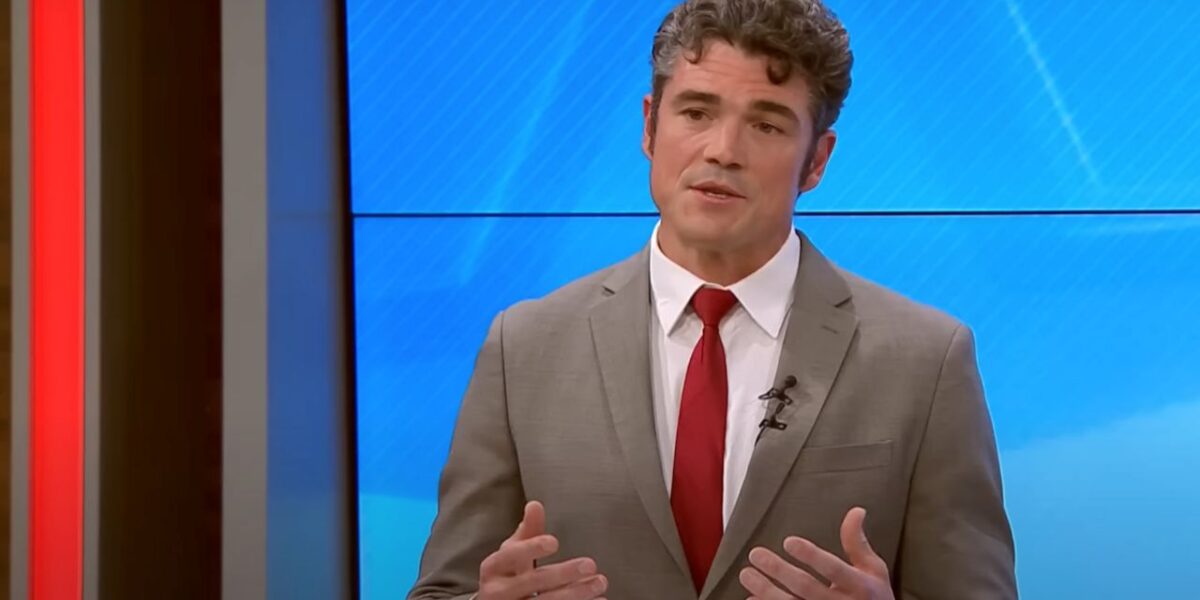
Joe Kent, the director of the National Counterterrorism Center, resigned Tuesday in what appears to be the first senior departure from the Trump administration directly tied to the war in Iran. His exit is significant not only because of his rank, but because Kent had entered office as a prominent figure in the administration’s anti-interventionist wing and had worked closely with Director of National Intelligence Tulsi Gabbard.
Kent made the reason for his resignation explicit. In his resignation letter, he wrote that he could not support the ongoing war and argued that Iran posed “no imminent threat” to the United States. He also claimed the conflict had been driven by pressure from Israel and its allies in Washington, turning what might have remained an internal policy disagreement into one of the sharpest public rebukes yet from inside Trump’s national-security team.
That makes this more than a staffing story. Kent’s resignation exposes a real fracture inside the broader America First coalition, where opposition to open-ended military entanglements in the Middle East has long been a defining principle. His message to Trump was, in effect, that the administration had crossed a line it once claimed it would never cross: entering another Middle East war without a clearly demonstrated imminent threat to the homeland.
The job Kent is leaving is not symbolic. According to the Office of the Director of National Intelligence, the NCTC director serves as the government’s principal counterterrorism adviser to the president and leads the U.S. counterterrorism and counternarcotics enterprise. A resignation from that post, in the middle of an active war, lands with far more force than a routine political departure because it comes from one of the administration’s most senior intelligence officials.
Kent had only been in the role since last summer. The Senate confirmed him in July 2025, after a contentious process in which Republicans backed his military and intelligence background while Democrats warned that his past associations and rhetoric made him a risky choice for such a sensitive national-security post. The confirmation vote was 52-44, and his arrival at NCTC was formally welcomed by Gabbard’s office as part of the administration’s new intelligence team.
His background had always made him a politically unusual intelligence chief. Kent served in Army Special Forces, worked as a CIA paramilitary officer, and later ran unsuccessfully for Congress as a Trump-aligned Republican. Even before this resignation, he was one of the administration’s more polarizing national-security figures, with Democrats pointing to his ties to far-right figures and his promotion of conspiracy theories related to Jan. 6 during the battle over his nomination.
What gives the resignation extra weight is the language Kent chose. He framed the war not as a tragic necessity or a strategic miscalculation, but as a conflict sold to the president through misinformation and pressure. He also linked the current moment to the Iraq War, arguing that the same kind of persuasive machinery had again pushed Washington toward a conflict that could cost American lives without delivering a clear national benefit. That is a direct challenge to the administration’s public case for the war and to the broader argument that the campaign was necessary for U.S. security.
The political implications are serious. Kent is not a generic dissenter from the bureaucratic establishment; he is the kind of official who was supposed to embody Trump-era skepticism of foreign-policy adventurism. When someone with that profile resigns and says the war contradicts the movement’s own stated principles, the criticism is harder to dismiss as opposition talking points. It also raises new questions about how much unease exists beneath the surface among officials and voters who supported Trump precisely because they believed he would resist another long Middle East conflict.
So far, there has been no immediate public response from the White House or the Office of the Director of National Intelligence addressing Kent’s accusations, according to multiple reports published Tuesday. That leaves his letter standing, at least for now, as an unusually public and unusually personal indictment from inside the administration during wartime.
For the administration, the damage is not only operational but political. Resignations can be managed. What is harder to contain is the symbolism of a top counterterrorism official walking away and declaring that the war itself lacked a legitimate immediate trigger. Kent’s departure will now be read not just as a personnel shake-up, but as evidence that the administration’s Iran policy is creating internal strains strong enough to break one of its own senior national-security appointees.
Kent’s letter, in full:
After much reflection, I have decided to resign from my position as Director of the National Counterterrorism Center, effective today.
I cannot in good conscience support the ongoing war in Iran. Iran posed no imminent threat to our nation, and it is clear that we started this war due to pressure from Israel and its powerful American lobby.
Don't miss anything!
Join our community:

I support the values and the foreign policies that you campaigned on in 2016, 2020, 2024, which you enacted in your first term. Until June of 2025, you understood that the wars in the Middle East were a trap that robbed America of the precious lives of our patriots and depleted the wealth and prosperity of our nation.
In your first administration, you understood better than any modern President how to decisively apply military power without getting us drawn into never-ending wars. You demonstrated this by killing Qasam Solamani and by defeating ISIS.
Early in this administration, high-ranking Israeli officials and influential members of the American media deployed a misinformation campaign that wholly undermined your America First platform and sowed pro-war sentiments to encourage a war with Iran. This echo chamber was used to deceive you into believing that Iran posed an imminent threat to the United States, and that should you strike now, there was a clear path to a swift victory. This was a lie and is the same tactic the Israelis used to draw us into the disastrous Iraq war that cost our nation the lives of thousands of our best men and women. We cannot make this mistake again.
As a veteran who deployed to combat 11 times and as a Gold Star husband who lost my beloved wife Shannon in a war manufactured by Israel, I cannot support sending the next generation off to fight and die in a war that serves no benefit to the American people nor justifies the cost of American lives.
I pray that you will reflect upon what we are doing in Iran, and who we are doing it for. The time for bold action is now. You can reverse course and chart a new path for our nation, or you can allow us to slip further toward decline and chaos. You hold the cards.
It was an honor to serve in your administration and to serve our great nation.
Joseph Kent
Director, National Counterterrorism Center