Summary
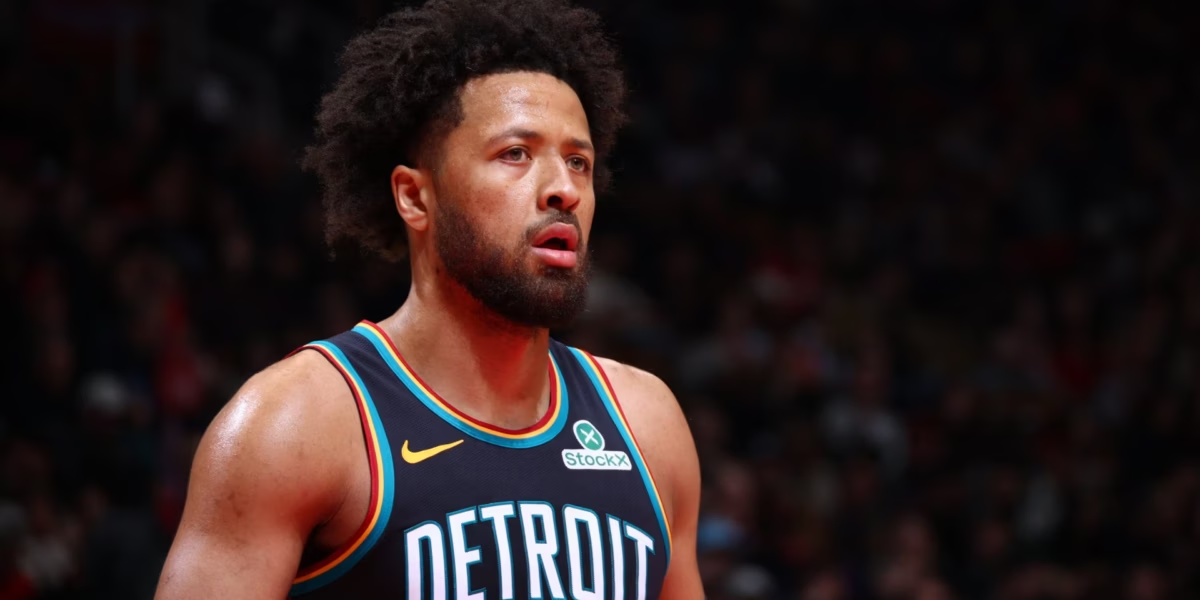
The Detroit Pistons have been dealt a major blow just as the regular season moves into its final and most important stretch. Cade Cunningham has been diagnosed with a collapsed lung, an injury that is expected to keep him sidelined for an extended period and immediately throws a layer of uncertainty over one of the NBA’s best stories this season.
There is at least some reason for optimism inside the situation. The collapse is considered mild, and there remains hope that Cunningham could be ready to return by the start of the playoffs on April 18. But for now, Detroit is still gathering information, and there is no clear timetable for when its franchise guard will be back on the floor.
That uncertainty alone is enough to change the tone around the Pistons.
Detroit entered Thursday with the best record in the Eastern Conference at 49-19, sitting 3.5 games ahead of the Boston Celtics, who stood at 46-23. This is no longer a team fighting simply to make the postseason or prove it belongs in the upper tier of the conference. The Pistons have spent the season building a real case as a top contender in the East, and Cunningham has been at the center of everything that made that rise possible.
At 24 years old, Cunningham has delivered the kind of season that changes the way a franchise is viewed. He is averaging 24.5 points and 9.9 assists per game, with that assist number ranking second in the NBA. His scoring, control of tempo and ability to carry Detroit’s offense have made him one of the most important players in the league this year, not just one of the best young guards.
That is why this injury lands with so much force.
The initial concern did not appear to point toward something this serious. Cunningham left Tuesday’s game against the Washington Wizards with what the team described at the time as back spasms. The sequence unfolded early. He seemed to get hurt while diving for a loose ball in the first quarter, stayed in the game for a few more minutes, then was taken out midway through the period and did not return. What first looked like a short-term physical issue has now turned into one of the most significant injury developments in the conference.
For Detroit, the timing could hardly be worse.
This is the point in the season when teams at the top of the standings are trying to lock in rhythm, protect seeding and sharpen rotations for the postseason. Instead, the Pistons now have to prepare for a stretch without the player who organizes so much of what they do offensively. Cunningham is not only their leading scorer. He is also the guard who controls possessions, creates easy looks, settles difficult moments and makes the entire structure of the offense work at a higher level.
Without him, Detroit’s challenge becomes twofold.
Don't miss anything!
Join our community:

First, the Pistons have to protect their place at the top of the East. A 3.5-game lead is meaningful, but it is not large enough to erase the pressure of losing a star guard for an extended period in March. Boston is close enough to keep that race alive, and every game now carries more weight for Detroit than it did just a few days ago.
Second, the team has to hope the calendar is still on its side.
The most encouraging detail in all of this is that there is still some optimism Cunningham could return by the start of the playoffs. That possibility changes the emotional weight of the injury. If Detroit can stay stable through the end of the regular season and get Cunningham back for the opening of the postseason, the story becomes one of survival and timing. If the absence stretches longer, then the Pistons’ playoff ceiling changes immediately.
There is another layer to this situation as well, and it touches Cunningham individually. He has played 61 games this season, leaving him just short of the 65-game threshold required to remain eligible for major regular-season honors such as MVP, All-NBA teams and Defensive Player of the Year. In a season where his name had earned real weight in those conversations, the injury now raises the possibility that one of the league’s breakout campaigns may not receive its full awards recognition.
But the larger issue for Detroit is not awards. It is survival, continuity and the hope that its best player can still return in time for games that will define the season.
The Pistons have spent months proving they are no longer a rebuilding team waiting for tomorrow. They have played like a team that expects to matter now. Cunningham’s injury does not erase that work, but it does change the path in front of them. A season built on momentum, control and rising belief now faces its hardest test yet.
Detroit is still in first place. The playoffs are still within reach. And there is still hope Cunningham can be back in time.
For now, though, the Pistons are left with the one thing contenders never want in late March: uncertainty around the player who matters most.
More in NBA