
Summary
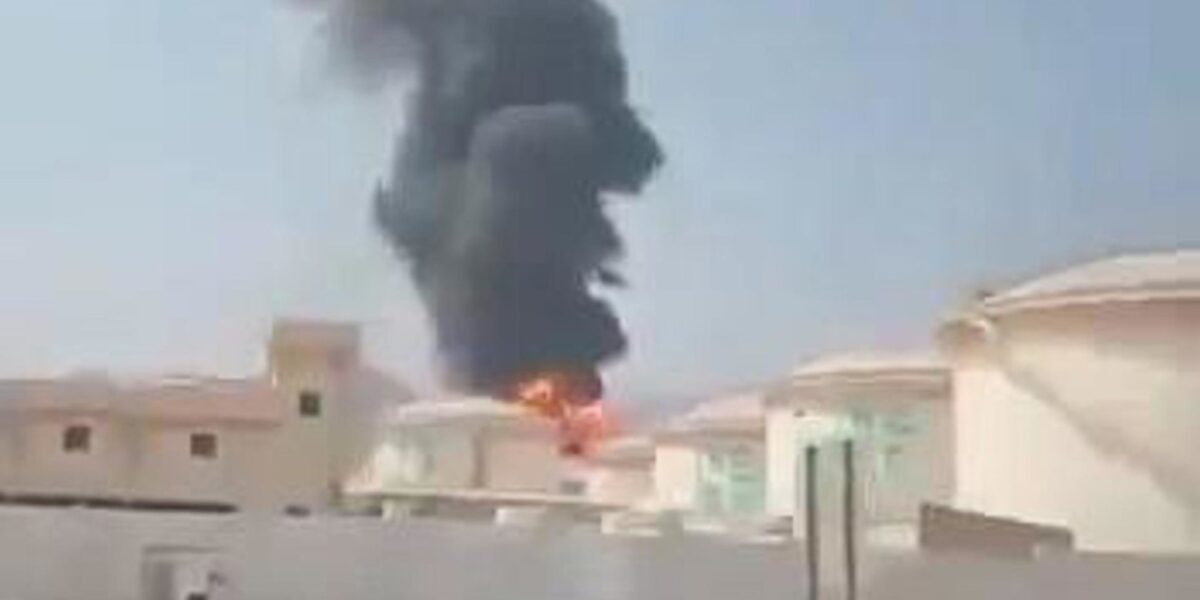
The U.S.-Israel war with Iran entered a more volatile phase Tuesday as the fight spread across multiple fronts — from Lebanon to the Gulf — and regional governments began signaling they may respond directly to Iranian strikes on their territory. The United States, meanwhile, escalated its own posture by urging Americans to leave 14 Middle Eastern countries, closing diplomatic facilities, and warning of a possible “imminent” missile or drone attack in eastern Saudi Arabia.
One of the clearest signs of the expanding risk came from Saudi Arabia. The U.S. mission issued a security alert warning of imminent missile and drone threats targeting Dhahran, advising Americans to shelter in place immediately and avoid traveling to the U.S. consulate there. The alert also said U.S. consular personnel were sheltering in their residences.

At the same time, the U.S. diplomatic footprint in the region has tightened. Washington urged Americans to depart countries including Bahrain, Egypt, Iraq, Israel, Jordan, Kuwait, Lebanon, Oman, Qatar, Saudi Arabia, the UAE, Syria and Yemen, citing serious security risks and recommending commercial routes when available.
In the Gulf, the political temperature is rising fast. Qatar’s foreign ministry spokesperson described Iranian strikes as a serious violation of sovereignty and warned they would not go unanswered — a shift that underscores how Tehran’s retaliation against U.S.-aligned neighbors could widen the war rather than isolate it.
On the northern front, Israel moved forces into Lebanon, framing the step as an added protective layer for communities near the border as fighting with Iran-backed Hezbollah intensifies. The move deepens the risk of a broader ground conflict in Lebanon at the same moment that missile and drone attacks are already hitting U.S. partners across the region.
The nuclear dimension also returned to the center of the story. The International Atomic Energy Agency (IAEA) confirmed new damage to entrance buildings at Iran’s underground Natanz Fuel Enrichment Plant, based on the latest satellite imagery. The agency said it did not expect radiological consequences and did not detect additional impact on the main facility itself, which had already suffered severe damage in an earlier conflict phase.
Taken together, these developments point to a conflict that is no longer confined to direct strikes between Iran and Israel or U.S. military operations on Iranian targets. It is now pressuring the wider region’s security architecture — the Gulf’s air defenses, global shipping concerns, diplomatic operations, and the stability of neighboring states that are increasingly being forced to choose how far they will go to respond.