
Summary
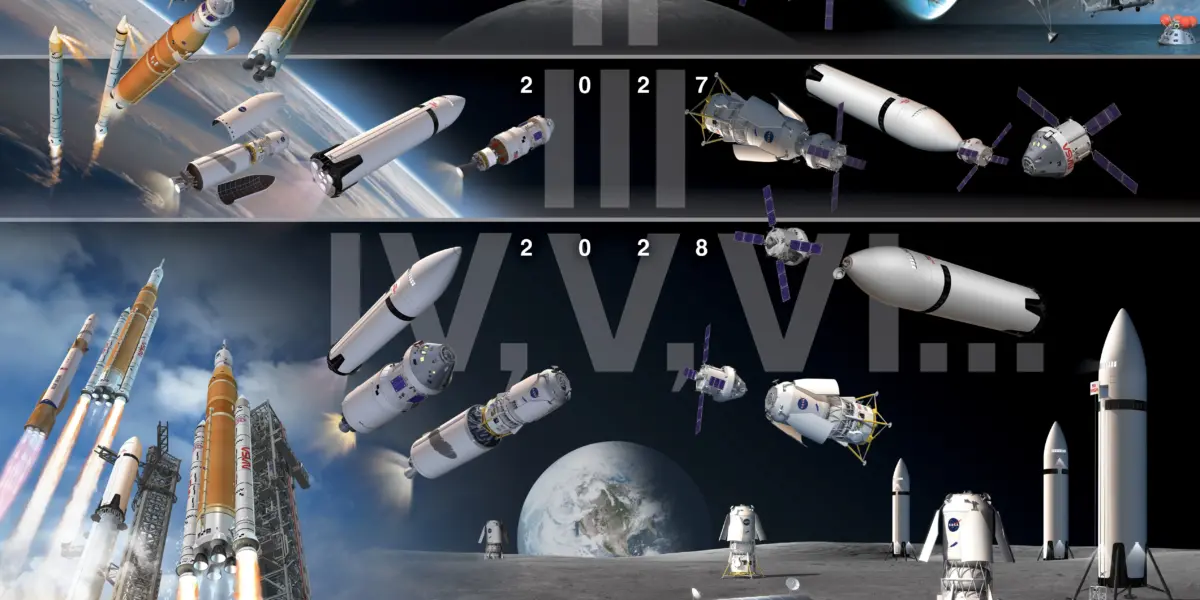
NASA’s announcement is not a minor schedule adjustment. It is a structural rewrite of the near-term Artemis sequence. The agency says it is increasing mission cadence in order to meet the U.S. objective of returning American astronauts to the Moon and building an enduring presence there, and that effort starts with a more standardized hardware approach and a new mission in 2027.
The most important change is the one tied to Artemis III. Rather than serving as the next lunar landing mission, Artemis III is now slated for 2027 as a low Earth orbit test flight meant to validate systems and procedures before NASA attempts an Artemis IV landing in 2028. That makes the revised Artemis III a bridge mission: less about planting boots on the Moon immediately, and more about lowering risk before NASA resumes surface operations.

According to NASA, that reworked Artemis III profile is expected to test rendezvous and docking with one or both commercial lunar landers being developed by SpaceX and Blue Origin, while also checking integrated life support, communications, propulsion and the next-generation Extravehicular Activity suits, or xEVA suits. NASA said it will define the mission in more detail after additional reviews with industry partners.
Why NASA says it is making the change
NASA is framing the new approach as a way to improve both speed and discipline. In the agency’s release, Administrator Jared Isaacman said NASA must standardize its approach, safely increase flight rate and eliminate delays, arguing that faster execution is necessary as competition from a major geopolitical rival grows.
Kshatriya made the agency’s engineering logic even clearer. He said NASA does not want to keep altering the SLS-Orion launch stack between early Artemis missions when there is still so much to learn from repeated flights. Instead, the agency wants to keep “testing like we fly,” staying as close as possible to the current Block 1-style Earth ascent configuration and following a step-by-step progression more in line with Apollo-era thinking, where reliability and crew safety drove the mission sequence.
That means the revised architecture is not just about adding another launch. It is about building a repeatable path: same core ascent logic, smaller jumps in complexity between flights, and more operational data before the program returns to actual landing missions.
Credit: NASA/Cory Huston
Annual Moon landings are now the long-term goal
NASA’s most ambitious promise in the release is the new cadence target. The agency says the revised Artemis architecture is meant to support at least one lunar surface landing every year after the program returns to the Moon. That is a major escalation from the slower, more episodic pace that has often defined Artemis planning in recent years.
If NASA can hold to that goal, Artemis would begin to look less like a series of isolated flagship missions and more like a sustained lunar campaign. That is also the larger strategic message behind the announcement: the agency is trying to show that Artemis is moving from demonstration mode toward a repeatable operational model. That inference follows directly from NASA’s stated combination of standardization, higher flight rate and annual landing intent.
Artemis II is still the next step — but repairs come first
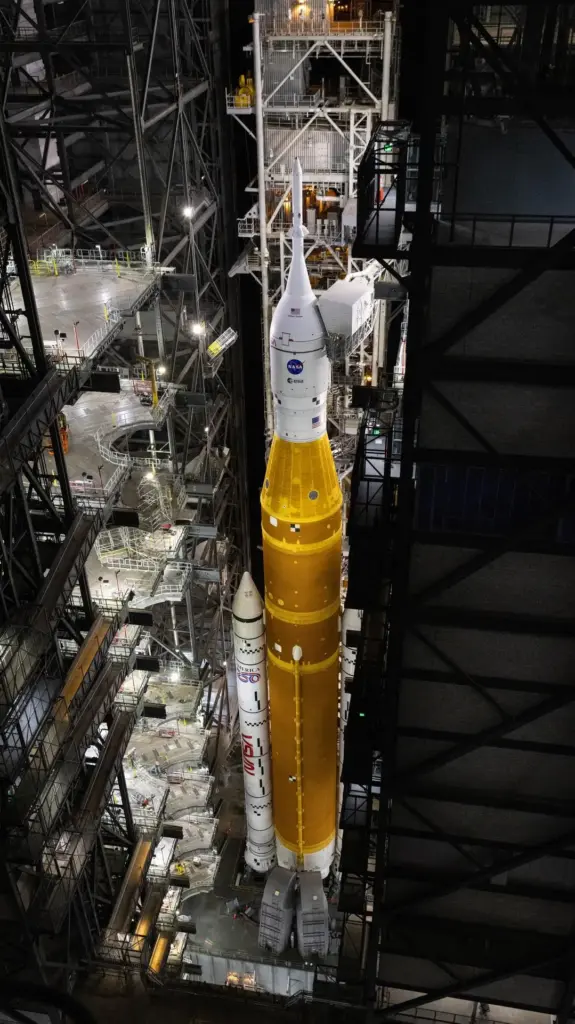
The longer-term Moon plan is changing at the same moment NASA is still working through near-term hardware issues on Artemis II, the first crewed Artemis flight. During the same Kennedy Space Center news conference where NASA announced the updated architecture, agency leaders said the SLS rocket and Orion spacecraft were rolled back to the Vehicle Assembly Building on Feb. 25 for repairs ahead of the next launch opportunities in April.
NASA said teams immediately began work on the helium issue tied to the Interim Cryogenic Propulsion Stage, while also preparing to replace batteries in the flight termination system and carry out end-to-end testing required for range safety. In a separate NASA update published on Feb. 26, the agency said engineers had optimized the repair flow and still expected the Artemis II Moon rocket to return to Launch Pad 39B in time for April launch opportunities, pending the outcome of ongoing reviews and repair work.
That is why the Artemis announcement matters on two levels at once. NASA is trying to accelerate the full Moon campaign, but it is also still in the hard, practical phase of getting Artemis II safely off the ground. The revised timeline only works if the near-term missions deliver the data and confidence the agency says it wants.
What this means for Artemis now
For now, the headline is straightforward: NASA has inserted a new test step before the next lunar landing, and it is doing so to make the later missions more repeatable and less risky. Artemis III is becoming a systems-validation mission in Earth orbit, Artemis IV is now the planned 2028 landing mission, and NASA says the broader goal is a more regular, more sustainable return to the Moon.
The harder question is whether the program can turn that architecture into schedule reality. NASA’s release presents a more coherent sequence than the one it is replacing, but the agency is also asking its workforce, its contractors and its partners to move faster while solving immediate technical problems on Artemis II. The new roadmap is clear. The next test is execution.
