
Summary
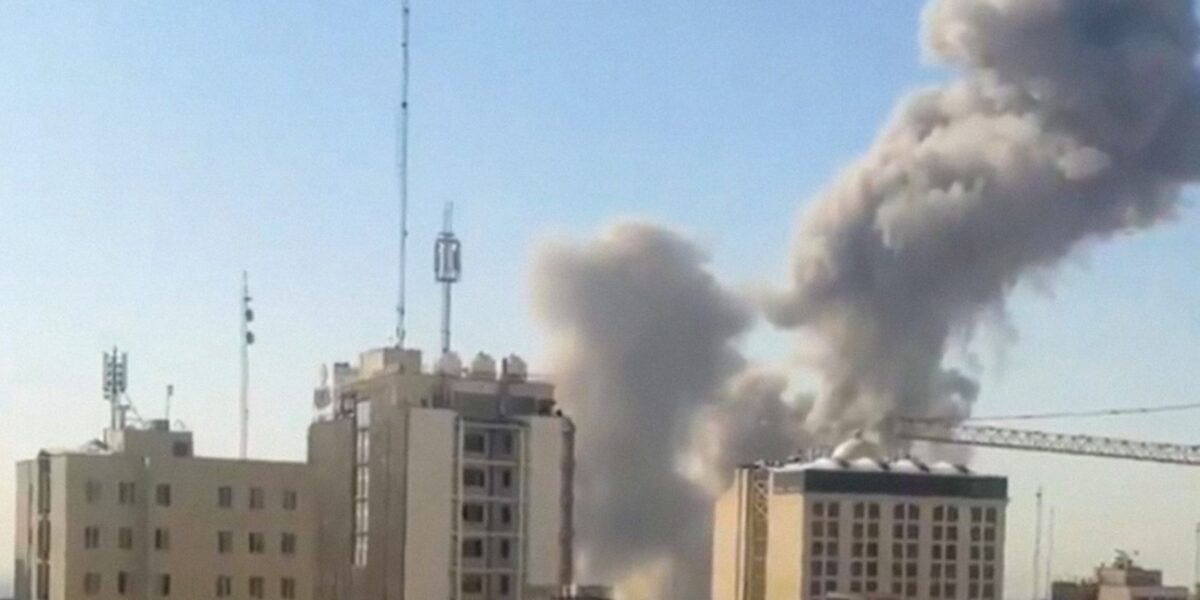
Israel said it attacked Iran to remove threats to Israeli security, with Defence Minister Israel Katz calling the operation “pre-emptive.” Reuters reported that an Israeli defence official said the operation had been planned for months with Washington and that the launch date had been decided weeks ago. Explosions were reported in Tehran, while Israel activated sirens and emergency alerts across the country.
The U.S. role stopped being implicit within hours. Reuters reported that the United States and Israel carried out the strikes together, with Trump describing the campaign in a social media video as a “massive” operation intended to ensure Iran does not obtain a nuclear weapon and to eliminate imminent threats from the Iranian regime. He also told Iranians to remain sheltered because “bombs will be dropping everywhere.”

The attack comes months after the 12-day air war in June 2025 between Israel and Iran and after a new round of U.S.-Iran diplomacy in February failed to produce a breakthrough. Reuters said the latest assault further dimmed hopes for a negotiated path on Iran’s nuclear program.
Iran retaliates, and the conflict spills into the Gulf
Iran’s response began quickly. Reuters reported missile launches toward Israel, followed by attacks on Gulf states that host U.S. military assets, including missile activity reported around Bahrain, Qatar, the UAE, Kuwait and Jordan. Bahrain said a missile hit a U.S. Navy service center, while the UAE reported one death in Abu Dhabi.
That shift matters because it means the confrontation is no longer contained to Iranian and Israeli territory. It has already expanded into a wider regional security crisis involving U.S. military infrastructure, Gulf airspace and major international transit routes. That is an inference based on the pattern of retaliation and the immediate aviation shutdowns reported across the region.
Israel moves into emergency footing
Inside Israel, the government moved rapidly into emergency mode. Reuters reported that authorities closed schools and workplaces, banned public gatherings, called up tens of thousands of reservists and told civilians to follow emergency instructions as Iranian missiles and drones were expected. Hospitals including Sheba Medical Center near Tel Aviv began moving wards and services into protected underground areas.
Israel also closed its airspace to civilian flights, though Reuters reported that land borders with Egypt and Jordan remained open. The U.S. Embassy in Jerusalem told government personnel to shelter in place.
Airlines halt flights and regional airspace closes
The military escalation immediately hit civilian aviation. Reuters reported that airspace over Iran, Iraq, Kuwait, Israel and Bahrain was left virtually empty, while Israel, Iran, Iraq, Bahrain, Qatar, Kuwait and Jordan all moved to close airspace after the strikes and reprisals.
The impact on airlines was equally swift. Reuters said British Airways, Lufthansa, Wizz Air, Air France, Iberia and KLM either canceled or rerouted flights, while regional carriers including Emirates, flydubai, Qatar Airways and Kuwait Airways also suspended or disrupted service. The European Union Aviation Safety Agency advised airlines to stay out of affected airspace.
That makes this more than a battlefield story. The conflict is already affecting one of the world’s most important aviation corridors, with consequences for travel between Europe, Asia and the Gulf.
Global reactions split quickly
Diplomatic responses reflected the divide over the attack. Brazil condemned the U.S.-Israeli strikes on Iranian targets, said they happened during an ongoing negotiation process, urged all sides to respect international law and exercise maximum restraint, and said Brazilian embassies in the region were monitoring the safety of Brazilian citizens.
Russia’s response was even harsher. Reuters reported that Moscow accused Trump and Israel of embarking on a “dangerously irresponsible” attack that was pushing the Middle East into an abyss, while warning of possible humanitarian, economic and even radiological consequences.
At the same time, Reuters reported that Germany, France and Britain condemned Iranian attacks on countries in the region and said Tehran must refrain from indiscriminate strikes and return to negotiations. That contrast shows how quickly the diplomatic argument is splitting between condemnation of the initial assault and condemnation of Iran’s retaliation.
What matters now
The biggest immediate question is no longer whether the conflict has escalated. It already has. The key question now is how far the retaliation cycle goes from here: whether Iran limits its response, whether Israel and the U.S. broaden their military objectives, and whether Gulf states become more directly drawn into the fighting. Those outcomes were still unresolved as of Saturday, but the early signs point to a crisis moving faster than diplomacy.
